
Why Jamaican Food Is Unique: Why It Tastes Like Nowhere Else on Earth
Ask a Jamaican what makes their food special and they will probably say "the seasoning." They are not wrong — but they are only telling a fraction of the story. The deeper answer to why Jamaican food is unique goes far beyond spices; it is found in the history, cultures, and traditions that have shaped every dish.
The real answer is history. Five hundred years of it, compressed into a small island in the Caribbean Sea and expressed every day in what we grow, how we cook, and what we put on the table.
Jamaican cuisine is not a single tradition. It is at least seven — layered on top of each other over centuries, sometimes by choice, mostly by force, always resulting in something more extraordinary than any one of them could have produced alone.
This is that story.
Table Of Contents
Before Everyone Else: The Taino
Before Columbus, before sugar, before any of the groups who would come to define Jamaican food culture, there were the Taino — the island's original people.
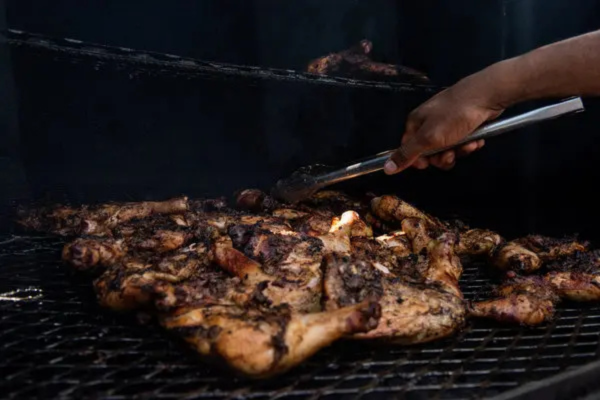
Jerk Chicken
They gave us cassava, sweet potato, and the method of cooking meat over an open fire with local spices. That last contribution is more significant than most people realise. It is said that the Taino developed the cooking and seasoning of jerk while the Maroons — escaped enslaved Africans — later introduced the pit that it was cooked on. In other words, Jamaica's most famous culinary export is a collaboration across centuries and cultures, not the invention of any single group.
The Taino also gave us bammy — the cassava flatbread that still sits beside our escovitch fish on Sunday mornings — and the clay cooking pot traditions that shaped how Jamaican food was prepared long before the first European ship arrived.
They were largely gone within a century of Columbus's arrival. But their food legacy is on your plate every single day, whether you know it or not.
The Spanish: The Cooks Nobody Remembers
The Spanish were Jamaica's first European colonisers — arriving in 1494 and staying for over 150 years — and they are the most underappreciated influence on Jamaican cuisine.
We have the Spaniards to thank for stewed peas with cured meat, oxtail and cow foot, as well as frying as a method of cooking. They also left us with hot country-style chocolate made from roasted ground and spiced cocoa beans, gizzada, and the tradition of soaking fruits in wine for wedding cakes and Christmas pudding. They also brought cattle, goats, pigs and horses.
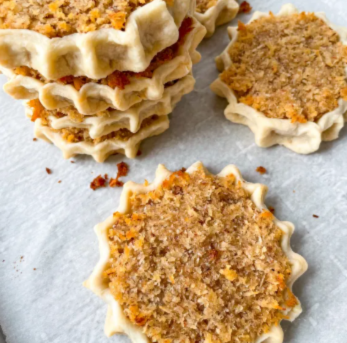
Gizzada
Think about that list for a moment. Oxtail. Stewed peas. Fried food. Christmas pudding. Gizzada. These are not peripheral items on the Jamaican table — they are central to it. And they all trace back to the Spanish, who are rarely mentioned when Jamaicans talk about their food history.
Escovitch fish — one of Jamaica's most beloved dishes — is the Jamaican interpretation of the Spanish escabeche, a method of preparing food with vinegar and spices. The fish is entirely Jamaican. The technique is entirely Spanish. The result is entirely its own thing — which is how Jamaican food works.
The British: The Complicated Inheritance
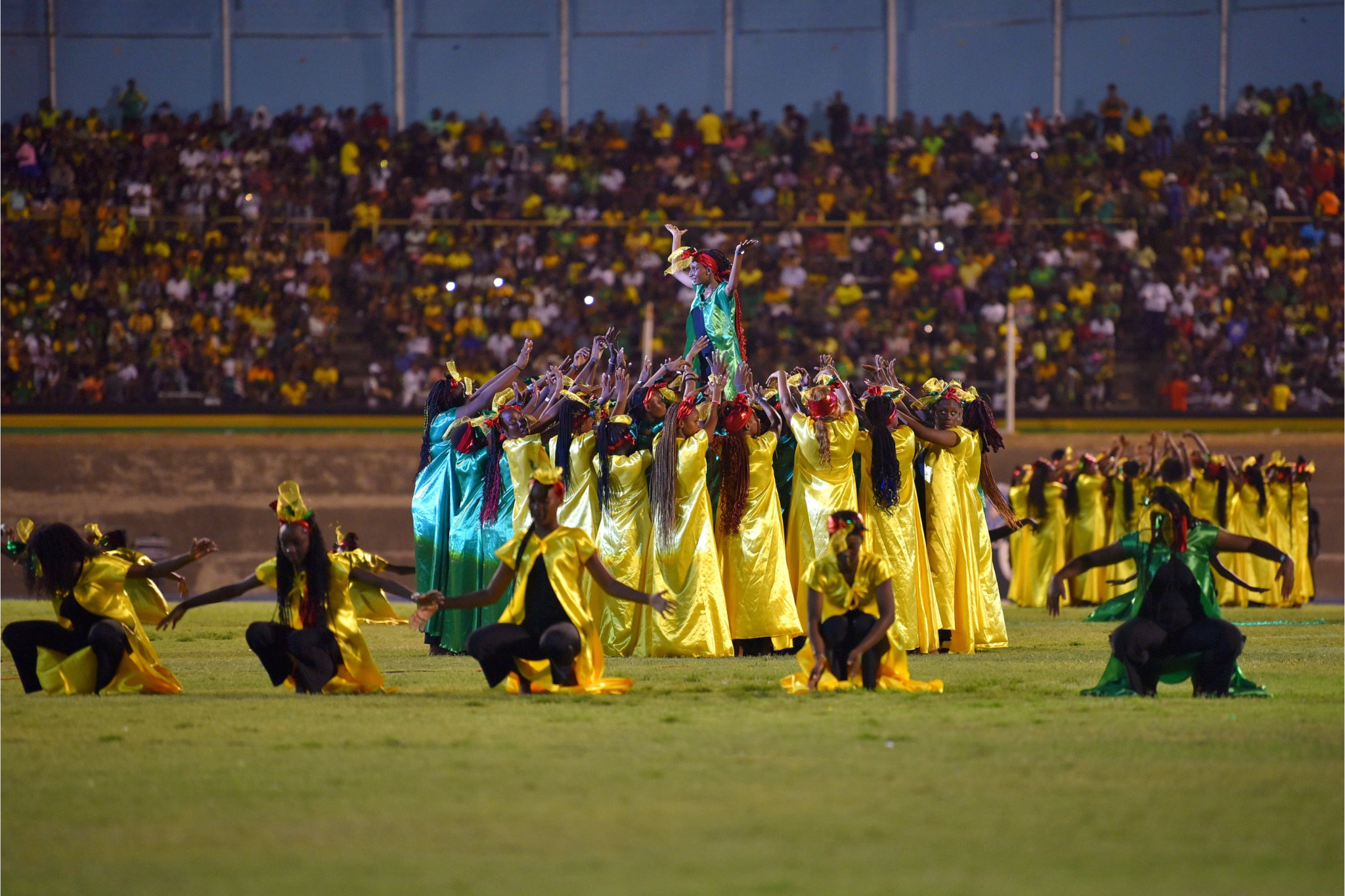
Independence Celebrations
The British took Jamaica from the Spanish in 1655 and held it until independence in 1962. Their culinary legacy is, like their presence, complicated.
They built their kingdom on sugar cultivated by African labour and exported rum and molasses that were traded for flour, pork and pickled fish. These became staples in the slave diet and are still favourites today. They also introduced breadfruit, otaheiti apples, mangoes, rose apples, turmeric, black pepper and coffee.
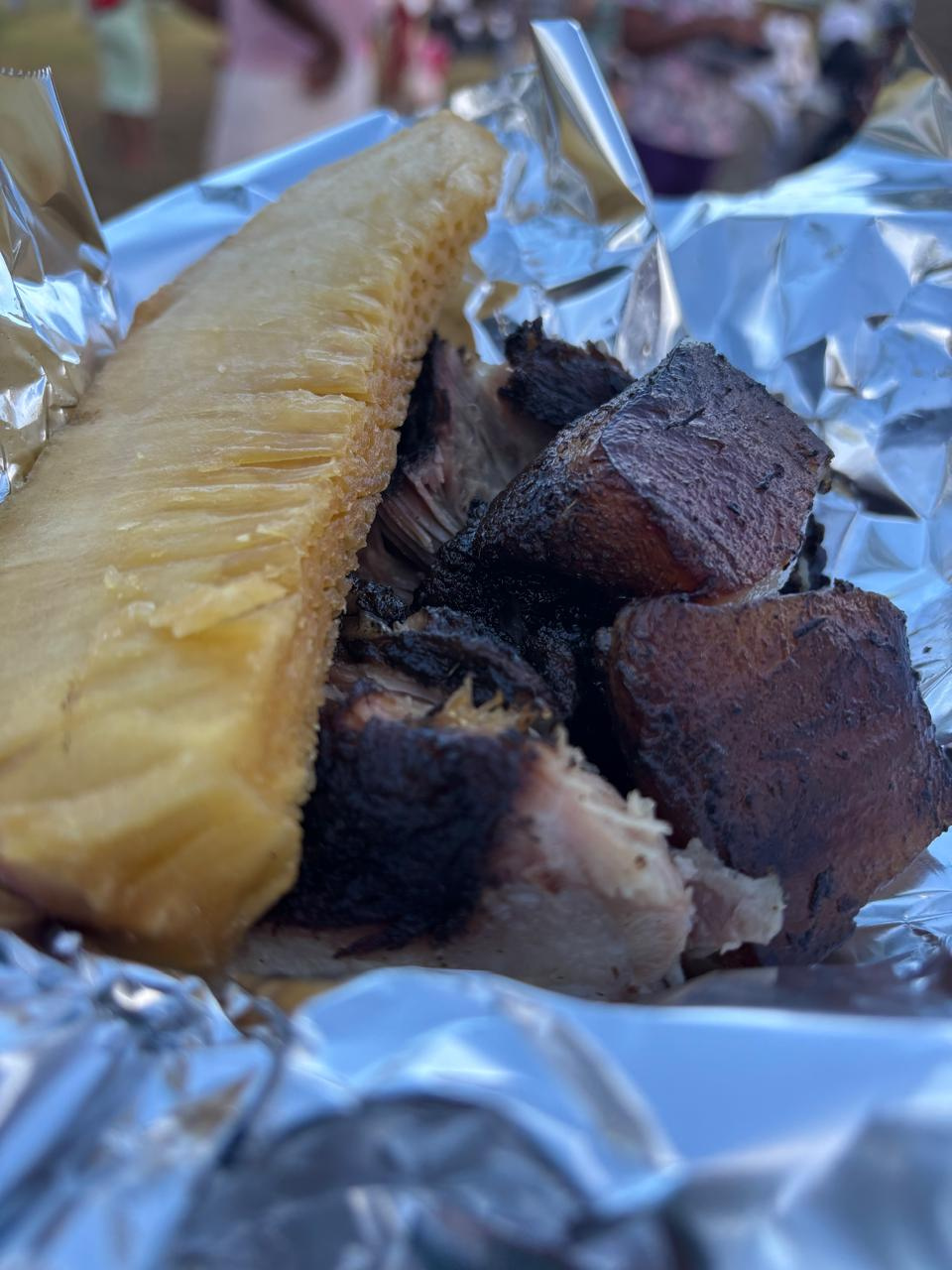
Breadfruit and Pork
Wait — the British introduced mangoes to Jamaica? And breadfruit? Yes. Breadfruit was famously brought to Jamaica by Captain Bligh in 1793 as a cheap food source for enslaved people. Enslaved people initially refused to eat it. Today it is one of the most beloved ingredients on the island.
Evidence of the influence of the sweet-toothed English remains today in the rich pastries Jamaicans love — Easter buns, tarts, sponge cakes, fruit cakes, jams, pies, Christmas pudding, rice pudding, marmalade and pancakes.
The British also gave us the Cornish pasty — which became the Jamaican patty, arguably the island's most democratic food. Eaten by everyone, available everywhere, endlessly debated and fiercely personal. That journey from a Cornish tin miner's lunch to a Jamaican institution is one of the most extraordinary transformations in food history.
Africa: The Heart of Everything
If the Taino gave Jamaican food its bones and the Spanish and British gave it some of its techniques and ingredients, it was the enslaved Africans who gave it its soul.
A significant portion of Jamaican cuisine can be traced back to African roots. Dishes like rice and peas, ackee and saltfish, and callaloo all have their roots in African cuisine. The use of spices — including Scotch bonnet peppers and pimento — also reflects African cooking's emphasis on bold and intense flavours. Techniques such as slow-cooking and the preservation of meats through smoking and spicing are deeply connected to African heritage.
The Africans who were brought to Jamaica came from many different nations and brought with them many different food traditions — but what they shared was a genius for making something extraordinary from very little. Enslaved people were given the parts of animals that nobody else wanted. They turned them into dishes — mannish water, cow foot stew, tripe and beans — that are now considered delicacies and are served at celebrations across the island.
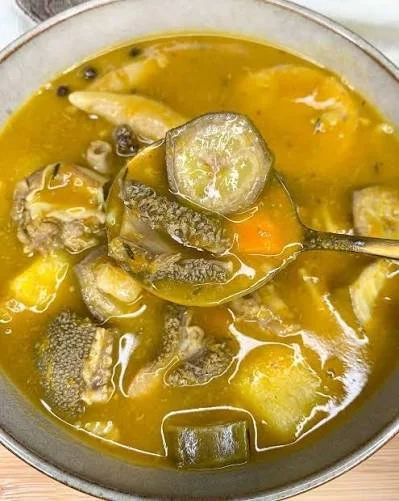
Mannish Water
Tools like the wooden mortar and pestle used to grind dried and roasted coffee and cocoa beans, and clay pots called yabba used for mixing cakes or seasoning meats, both have African origins. The tools of Jamaican cooking are African. The rhythms of Jamaican cooking — the slow simmer, the layered seasoning, the patience — are African.
Ackee, Jamaica's national fruit and half of the national dish, came from West Africa. It arrived on a slave ship. Today it is on every Jamaican breakfast table and is protected by export regulations because the world wants more of it than Jamaica can produce.
India: The Spice That Changed Everything
After emancipation in 1838, Indian indentured workers came to Jamaica to fill the labour gap on the plantations. Between 1845 and 1917, approximately 37,000 Indians arrived — and they brought their spices with them.
Indian indentured workers introduced spices like curry, which became a staple in Jamaican cooking, giving rise to popular dishes like curried goat.
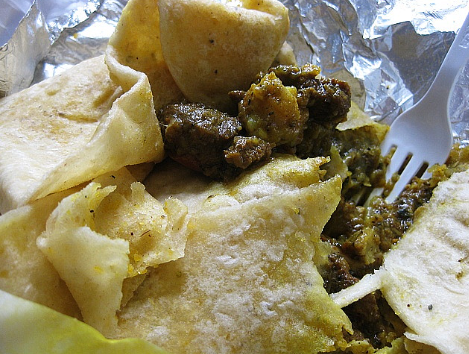
Curry Goat & Roti
Curried goat is now so thoroughly Jamaican that most people are surprised to learn it has Indian roots. It is served at every major celebration — weddings, funerals, christenings, Independence Day. It is the dish Jamaicans in the diaspora crave most when they are homesick. And it would not exist without the Indian workers who brought turmeric, cumin, coriander and their particular genius for spice to the island.
Roti — the flatbread that has become a beloved street food — is also Indian. So is the tradition of curry as a cooking method rather than a single spice. The Indians did not just add a dish to the Jamaican table. They changed the way Jamaican people think about flavour.
China: The Influence You Eat Every Day Without Knowing It
Chinese immigrants began arriving in Jamaica in the mid-1800s, and their influence on Jamaican food is everywhere — and almost entirely uncredited.
Chinese immigrants contributed condiments like oyster sauce, hoisin sauce, sweet and sour sauce, Scotch bonnet-infused soy sauce, and sesame oil. The Jamaican twist donut — a variation of the Chinese mahua — and moon cake are of Chinese origin. A cast iron pot called the Chinese karahi, a Cantonese-style wok, was also introduced by the Chinese, along with the technique of stir-frying.
The Chinese also established the cook shop — the small, no-frills restaurant that became a cornerstone of Jamaican food culture and the precursor to the modern Jamaican diner. The tradition of rice as a central element of the Jamaican plate — not a side dish but a foundation — owes much to Chinese culinary influence.
Next time you pick up a Jamaican-style twist from a bakery, you are eating something with Chinese roots that has been in Jamaica for over 150 years. It does not feel Chinese anymore. It feels Jamaican. That is exactly the point.
The Rastafari: The Future Was Always Here
No account of Jamaican food culture is complete without the Rastafarian Ital tradition — and no tradition in Jamaican food is more relevant to the world right now.
Ital cooking — derived from the word "vital" — is a philosophy of eating that emphasises natural, unprocessed, plant-based foods, minimal salt, and a deep respect for what the earth produces. It developed within the Rastafarian movement in the mid-20th century as both a spiritual practice and an act of resistance against colonial food systems.
The world is now catching up. Plant-based eating, whole food philosophy, minimal processing, seasonal and local sourcing — these are the principles that Ital practitioners have been following for decades, long before they became global wellness trends. Jamaican grandmothers were farm-to-table before the term existed.
What This All Means for What Is on Your Plate
When you eat a Jamaican meal — a proper one, not a tourist version — you are eating the result of five centuries of cultural collision, adaptation and creativity.
The bammy beside your fish is Taino. The escovitch preparation is Spanish. The patty in your hand evolved from a British pasty. The ackee on your breakfast plate crossed the Atlantic from West Africa on a ship. The curry in your goat is Indian. The cook shop where you bought it was probably founded by a Chinese family. The Ital bowl at the health food spot downtown is Rastafarian philosophy made edible.
None of these influences simply added themselves to Jamaican food. They were transformed by it — taken up by Jamaican cooks, seasoned with Jamaican spices, adapted to Jamaican ingredients and Jamaican tastes until they became something entirely their own.
That is the genius of Jamaican cuisine. Not that it borrowed from everyone. But that it made everything it touched undeniably, irreversibly Jamaican.
Taste the History for Yourself
At Jamaica Culinary Tours, we believe that food is the most honest history book ever written. Every dish tells you where people came from, what they survived, and what they chose to carry forward.
The story of why Jamaican food is unique is found in these traditions, flavors, and generations of history passed down through every recipe. On our Roots & Routes experience through St. Ann, we do not just feed you. We tell you the story of what you are eating — because understanding the history makes everything taste better.
Come Eat Wid Us.
Ready to taste five centuries of Jamaican history in a single afternoon? Book your Roots & Routes experience at Roots & Routes
